

Decoding the Great American Designer
From Calvin Klein to Khaite, American fashion reflects the changing American dream.

My father repeatedly asks me who I think the great American designer is. It’s the kind of question that sounds simple until you actually try to answer it. I usually roll my eyes and deflect because the question deserves far more thoughtfulness than people realize. There isn’t one answer. American fashion moves in generations, and each generation reveals something different about who they are by what they wear.
My father was Jewelry Designer of the Year in the early 80s and as a young man, not yet 30, he was called the Golden Boy of 47th Street. He floated through a New York filled with photographers, stylists, editors, models, and designers who would later become fashion mythology. He grew up around Danceteria, Xenon, and Studio 54 when fashion was social currency, not PowerPoints and P&L spreadsheets.
The more I think about his question, the more I understand its complexity. To even begin answering it, you have to look at what each generation of American fashion was responding to. Fashion has always responded to our desires as Americans. What we wear reveals what we value. Freedom. Wealth. Sex. Power. Ease. Individuality. Status. Even invisibility.
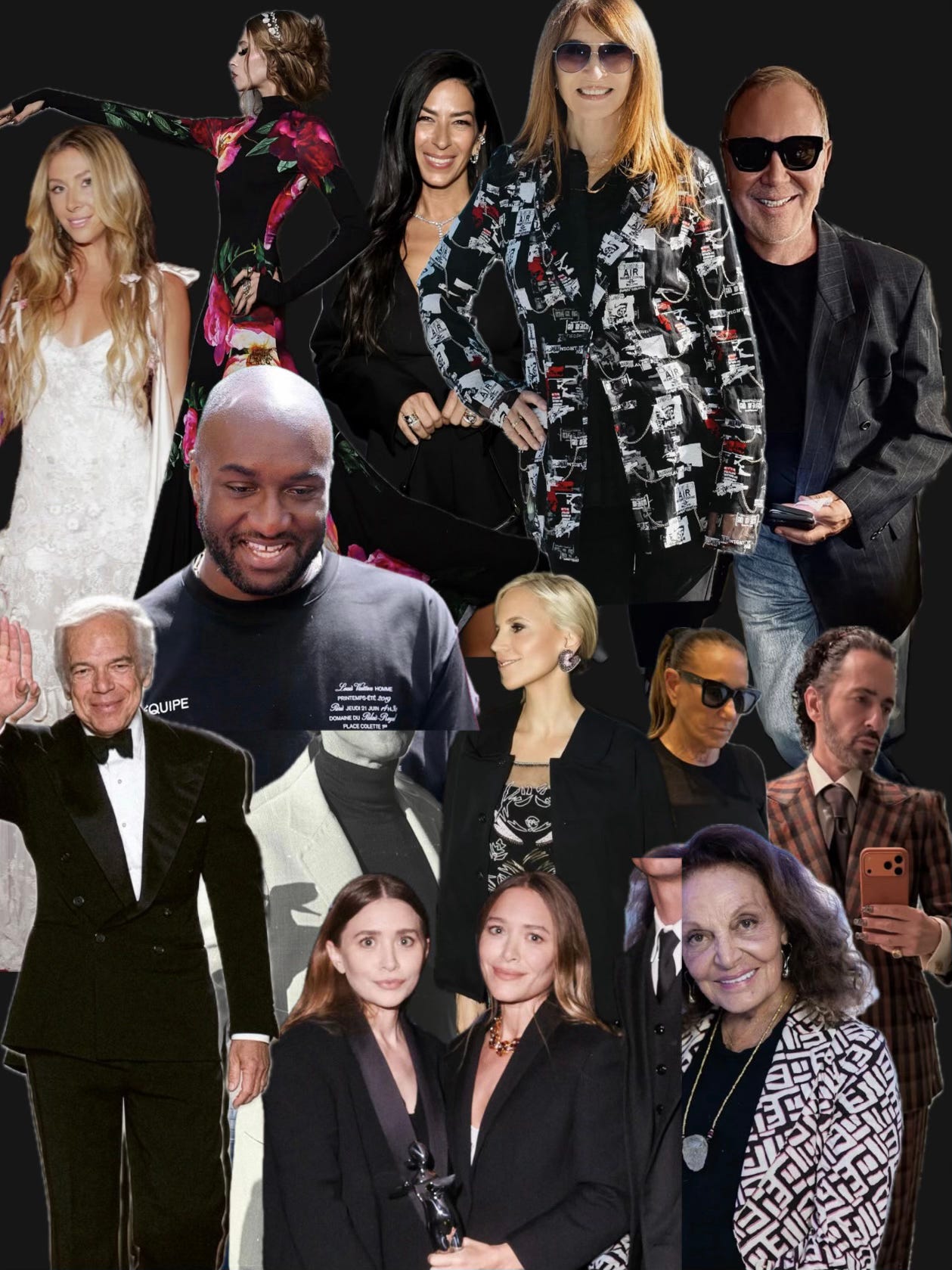
Halston, Bill Blass, Diane von Fürstenberg and Geoffrey Beene helped define American glamour at a moment when the country itself was redefining freedom and excess. Halston brought ease and sensuality. Bill Blass embodied polished American wealth. Geoffrey Beene approached fashion almost architecturally. DVF represented women’s liberation and freedom. Their generation established that American fashion could have its own identity outside of Paris.
Then came Calvin Klein, who stripped fashion down to minimalism, sex appeal, denim, underwear, and branding. But Calvin wasn’t just clothing. Like Ralph Lauren, he built a complete American lifestyle universe. Home. Fragrance. Furniture. Advertising. Fantasy. Calvin’s version was simply colder, sexier, and more modern. If Ralph sold old-money aspiration, Calvin sold sleek urban desire.
Then came Donna Karan, Michael Kors, Isaac Mizrahi, and Carolina Herrera, who defined a more modern kind of American ambition. Donna dressed the woman entering corporate power. Michael made jet-set glamour feel energetic and attainable. Isaac brought wit, charm, and personality, while Carolina embodied polished uptown elegance. The fantasy was no longer inherited wealth or disco decadence. Women were climbing, working, moving, building lives and identities in public.
In the 90s, American fashion loosened up. Marc Jacobs transformed downtown culture into high-end luxury. Anna Sui built dream worlds. Betsey Johnson turned femininity into rebellion and theater. Nicole Miller understood the sleek urban woman better than almost anyone. Fashion became less uptown fantasy and more like the uneven cobblestones of Soho.
The contemporary era was defined by affordability as Alexander Wang, Phillip Lim, Derek Lam, Tory Burch, Rebecca Minkoff rose during the height of department stores, celebrity culture, fashion blogs, Gossip Girl, and eventually social media. This was the generation that collapsed the divide between luxury and accessibility. Fashion became lifestyle-adjacent. Handbags exploded. Contemporary fashion became a true American business machine.
We can’t forget the rise of streetwear in the 2010s. Supreme transformed scarcity, hype, and community into a new form of luxury currency. Virgil Abloh blurred the lines between streetwear, art, music, and luxury fashion. For the first time in modern American fashion history, men’s fashion was suddenly driving fashion itself.
What’s most interesting, to me, is what’s happening now.
For decades, the defining figures of American fashion were mostly men shaping female aspiration. Halston. Calvin. Ralph. Kors. Marc. But today, the emotional vocabulary of American fashion suddenly feels overwhelmingly female.
As we stand, Mary-Kate Olsen and Ashley Olsen at The Row are making luxury feel intellectual and understated. Catherine Holstein at Khaite is defining modern female power without obvious power signals. Rebecca Hessel Cohen is growing LoveShackFancy around nostalgia, softness, fantasy, and hyper-femininity. Stacey Bendet built the empire of Alice + Olivia around confidence and optimism.
As I’m writing this, I’m noticing the divide between luxury and contemporary fashion becoming impossible to ignore. Luxury is becoming quieter, more coded, and increasingly disconnected from obvious status symbols.
The women buying The Row and Khaite are often dressing more for the approval of other women than for the male gaze. Contemporary fashion, meanwhile, is increasingly driven by visibility, accessibility, social media, and volume. One side whispers. The other needs to be immediately viral.That split says more about America right now than the clothes themselves.
Maybe that’s the real evolution of the great American designer. Not simply who designs the best clothes, but who best captures what Americans want to become at a particular moment in time.
The great American designer is Claire McCardell - full stop - her career was cut short when she died young of cancer - All should be compared to how she developed separates dressing systems and design problem solving - Halston's best work copied directly from her - plus she developed brilliant brand codes (American designers struggle with this)