

Department Stores Are Morphing Into Mini Malls
Touring the Bloomingdale’s renovation, I realized that nothing visually cues me that I’m at Bloomingdale’s, in New York, inside a cultural icon.

Why are we still designing department stores in the image of malls, long after the mall has died?
I was recently walking through the multi-million-dollar renovation of Bloomingdale’s and while it’s really quite nice, I realized something was missing: a sense of place. Nothing about the store visually signals that I’m in Bloomingdale’s. That I’m in New York. That I’m inside an iconic institution. Instead, it feels like a collection of designer boutiques stitched together with bright lighting. A luxury mall without the mall.
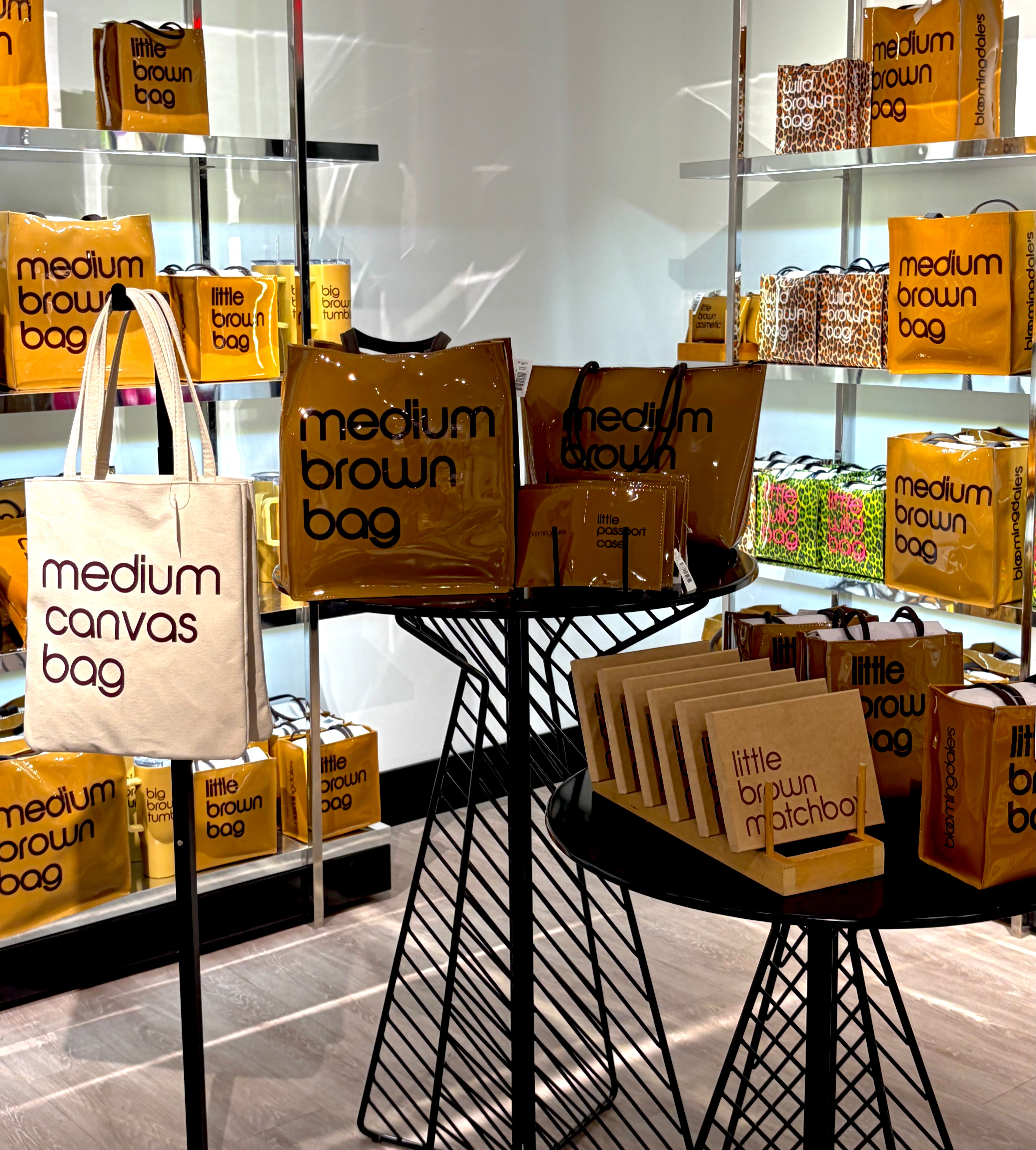
The model makes sense from a financial perspective. Brands pay for their footprint and furnish the inventory– very similar to the financial structure within a mall. What we lose, however, might be more valuable.
And yet, my favorite spot in Bloomingdale’s right now isn’t a branded boutique at all. It’s a section tucked between cosmetics and fragrance on the main floor, where there’s always a seasonal theme — usually tied to a broader sponsorship. Right now it’s Wuthering Heights. The assortment cuts across brands and categories, and despite essentially walking through a physical sponsored post, it feels like you’re exploring an idea. Bergdorf Goodman does something similar with Linda’s Finds — unsponsored and even more opinionated. In both cases, the store reappears as a curator rather than a landlord, and that shift changes the entire context of the experience.
And this isn’t just about Bloomingdale’s. Nearly every major department store now delivers the same experience, regardless of geography. I’ve walked through El Palacio de Hierro in Mexico City, Isetan in Tokyo, Takashimaya in Singapore, Galeries Lafayette in Paris, and Rinascente in Milan. And yet the formula feels eerily consistent. The architecture changes. The merchandising language does not.
The department store isn’t just a place to shop. It’s civic infrastructure, as important to local culture as a museum or theater. Think of Dover Street Market, Le Bon Marché, Liberty London, and 10 Corso Como. Each is rooted in a distinct local language of expression. Each asserts itself and shapes a narrative that feels curated rather than leased.
If sameness is what killed the mall, we should be very careful about replicating it inside our department stores. There is a way for both models to coexist with brand-controlled boutiques living alongside institutional curation. That means dedicating prime square footage to rotating, cross-brand edits. Creating permanent thematic zones that mix categories rather than isolate them.
Window space and high-traffic floors should be owned by the store and used to lead customers through a story that showcases fashion and trends through the store’s own distinct vernacular. It means reinvesting in buyers and creative directors who shape the narrative across brands instead of allowing the brands to control the entire conversation.
I shop so often that I rarely enter a store with the intention of buying anything. Most of my in-store purchases are spontaneous and uncalculated. They happen when something jumps out at me and strikes me as new, even if I’ve seen it a thousand times while scrolling. In a store, in a different context, everything should look different than it does in a 400x400 square on a screen.
If context disappears, the department store just becomes a mall and that didn’t turn out so well.
If you follow or look into this subculture on Instagram of kids in their 20s living their lives like it’s the 80s. They wear vintage 80 clothes and visit malls that have not been redesigned for the neon, the color, the fountains etc. They want mall culture back and I am with them in their views ( I’m a GEN X kid) look up @glitterwave80s @chasing80s @gracemarian and you will catch a glimpse of their desire for what we had. Everything is brown and grey now. Malls were an experience, a sense of community and a past time. Everyone is on the phone now. It’s financially easier to make everything the same I guess. But build it and they will come. Maybe they need to revisit the 80s and 90s and see what worked because I think there is a want for it.