

The Bag That Bound Generations of Style
The Gordian Knot became legendary because it couldn't be undone. Nearly fifty years later, the Bottega Veneta Knot Clutch has achieved something just as rare.

Fashion loves to crown a new “It” bag every season. Most fade into fashion history within a few years. One has quietly endured for nearly half a century—and it isn’t Hermès or Chanel.
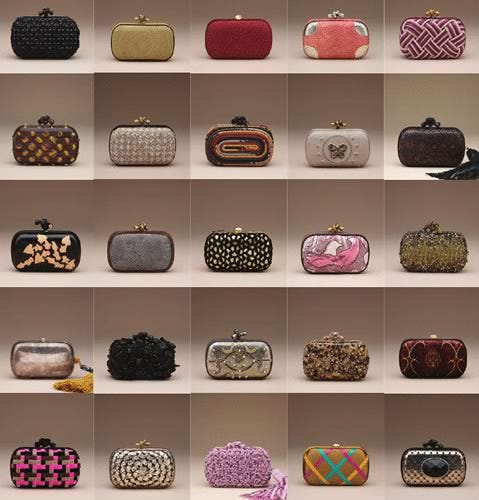
The Gordian Knot became legendary because it couldn’t be undone. The Bottega Veneta Knot Clutch has achieved something equally rare. Nearly fifty years after its debut, its place in luxury has never unraveled. While fashion has tied itself in knots chasing the next “It” bag, the Knot simply endured.
When the clutch first appeared in 1978, it wasn’t yet known as the Knot. The rounded silhouette and signature Intrecciato weave were part of the original design, but the closure evolved over time. Early versions featured a variety of clasps.
Tomas Maier, who in my opinion has never received the credit he deserves, revisited the design after becoming Bottega Veneta’s creative director in 2001. Rather than reinventing the bag, he simply replaced the existing closure with a sculptural leather knot and gave the bag its now-iconic name. It was an act of refinement rather than reinvention. He transformed an archival evening bag into one of luxury’s most enduring designs.
From there, the Knot became a canvas for craftsmanship. Each season brought new interpretations in satin, exotic skins, embroidery, lacquer, crystals, and extraordinary artisanal finishes, creating hundreds of collectible variations over the decades. The archive became so extensive that Bottega Veneta itself admits it doesn’t even have a full archive. They didn’t even realize the icon they had in their own catalogue.
Hunting for Knots is a little like learning to tie a sailor’s knot. Every variation is another twist in the story. Rather than chasing the newest release, collectors find themselves chasing decades of craftsmanship, each version revealing a different interpretation of the same timeless silhouette.
Perhaps the greatest surprise is that this icon remains remarkably attainable. Many vintage Knots can still be found in the $500 to $1,000 range, making them one of luxury’s most overlooked collecting opportunities. In an era when so many handbags are purchased because they’re trending, the Knot offers a chance to own a piece of design history that still continues to be written.
It has connected generations of collectors, survived changing creative directors, and quietly attended weddings, galas, black-tie dinners, from Tina Turner and Lauren Hutton to Nicole Kidman and Paris Hilton. Just as remarkably, it has been preserved through every modern creative era, from Tomas Maier, who transformed the archival clutch into the modern Knot, to Daniel Lee, Matthieu Blazy, and now Louise Trotter. Few luxury handbags have earned that kind of continuity.
Every great luxury house hopes to create an icon. Very few create one that survives nearly half a century without losing its relevance. Perhaps the real measure of an icon is not how tightly it’s woven into a single moment, but how seamlessly it binds generations together.